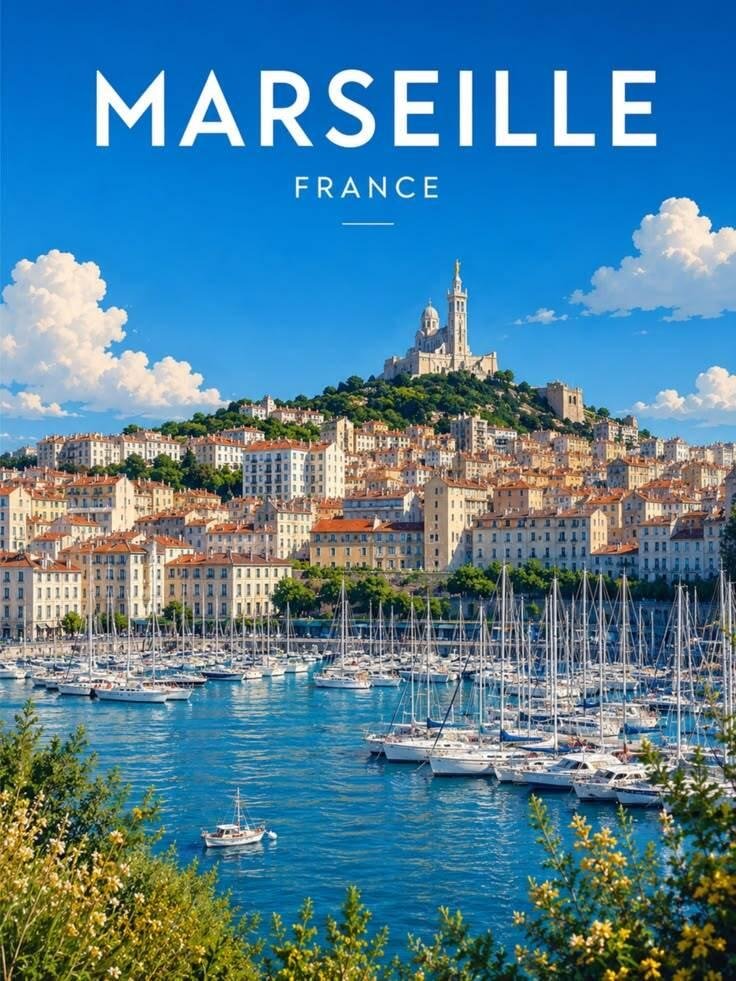
Marseille France, confuses people at first. A lot of visitors land expecting a smaller version of Nice, and it just isn’t that. It’s rougher, older, a bit chaotic depending on which street you’re on, and it doesn’t perform for tourists the way some other French cities do. Stick around a couple of days, though and it usually grows on you. Hard to explain why exactly. It just does.
What Is Marseille Famous For?
If you want to know “What Is Marseille Famous For?” The answer totally depends on who’s answering. Someone will bring up the age of the place, the oldest city in France, older than Paris by a long shot, started by Greek traders who liked the harbour. Someone else jumps straight to bouillabaisse, the fish stew everyone claims to make the “real” version of. And football comes up constantly. Olympique de Marseille isn’t just a local team, it’s closer to religion around here, and match days shut the city down in the best way.
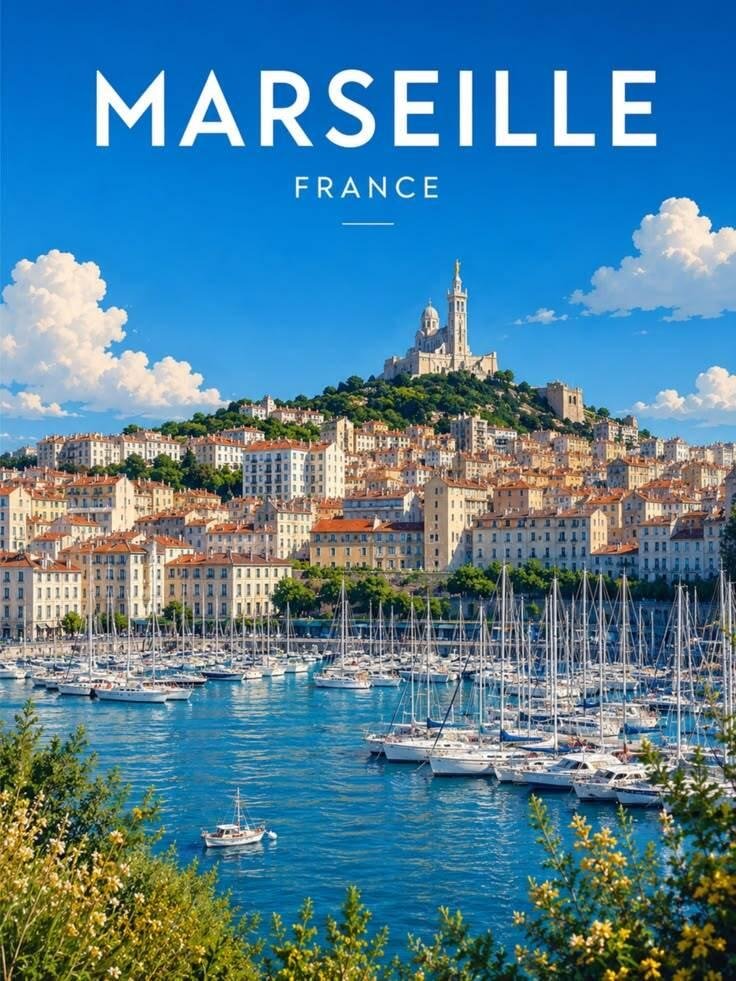
Then there’s the Vieux Port. Old Port. Been the centre of things forever, still functions as an actual working harbour too, not some tourist trap version of one. Fishing boats come in early, guys selling the catch right off the dock, and by afternoon the whole waterfront fills up with people eating and drinking.
Fun Facts About Marseille
A few fun facts about Marseille worth knowing before showing up.
It’s older than Paris. Not close either, we’re talking thousands of years back, Greek sailors settling the coast long before Paris was really a thing.
The soap, savon de Marseille, still gets made the old way, olive oil-based, and a couple of the original workshops let you walk in and watch the process.
The accent throws people off. Even French people from other regions need a second to catch it sometimes.
And this one surprises most visitors: Marseille sees more sunshine per year than Paris does. So it’s not really a summer-only city, even though that’s when most tourists show up anyway.
Also Read: Lyon France Travel Guide: Best Things to Do, Where to Stay & Travel Tips
Is Marseille on the French Riviera?
The inquiry “Is Marseille on the French Riviera?” often arises. The answer in strict geographical terms is no. The French Riviera, or Côte d’Azur as it is also referred to, really starts at some distance east of there, depending on your source, closer to either Toulon or Saint-Tropez. Also, in geographical terms, Marseille lies just outside that boundary.
But it still ties in with the French Riviera in terms of having the same coast, the same beautiful blue waters, hence the same peaceful vibe that makes one think of the French Riviera. Most tourists do not bother to be precise and simply take Marseille as a point of departure instead of relying on it as an indication of one of the cities located at the very end of the Riviera.
Best Things to Do in Marseille
Old Port
Old Port first, has to be. Mornings there are quiet, almost sleepy, with boats unloading fish. The same spot at night is a different place entirely, tables everywhere, plates of seafood, way more noise and life to it.
Notre-Dame de la Garde
Then walk up toward Notre-Dame de la Garde. It’s a climb, no way to sugarcoat that part. But once you’re up there looking out over the rooftops toward the sea, it makes sense why people bother.
The Calanques
The Calanques are worth planning a full day around. Limestone cliffs, hidden coves, sitting right outside the city and somehow looking nothing like the rest of mainland France. Boat trips run often if hiking isn’t your thing, but the cliff trails give views that genuinely make people stop mid-sentence.
Le Panier
Le Panier, the old quarter, is better without a plan, honestly. Just walk. Narrow streets, buildings painted every colour imaginable, tiny galleries, murals popping up where you’d least expect. Doesn’t feel put on for tourists either, which is rarer than it should be.
Museum of European and Mediterranean Civilisation
Mucem near the port pairs modern architecture with Mediterranean history exhibits. Even people who normally skip museums end up spending longer there than planned.
Where to Stay in Marseille
The Old Port area makes the most sense for a first trip since almost everything’s walkable from there. Central, loud, plenty of food nearby.
Le Panier fits better for quieter stays, small guesthouses squeezed between the narrow lanes, more character than convenience.
Beach people should aim closer to Prado beaches instead. A bit further out but still an easy tram ride in.
Budget travellers can find cheaper apartments and hostels around the train station, just worth checking recent reviews first since that particular area gets a little rough after dark.
Marseille France in October
October is honestly underrated. Summer crowds are gone, prices fall a bit, you can walk for miles on end without dehydrating your body into a pile of dust all under the gorgeous French sun, and even have breezes and cool nights which make a light jacket acceptable at night. Marseille France in October also seems like a good month to see the Calanques; you’ll be doing so without the long boat lines for deck chairs, and you can grab seats at restaurants without feeling like you need to shout for the waiter’s attention.
Travel Tips Before Visiting
Metro and trams cover most tourist spots fine, so renting a car isn’t really needed unless day trips outside the city are planned. Bring comfortable shoes. The hills near Notre Dame de la Garde and the uneven stone streets in Le Panier are not forgiving.
A little basic French helps, even though most people in tourist areas speak English without issue. Also, don’t skip bouillabaisse either, ideally somewhere that’s been making it for decades instead of a place built purely around tourist traffic.