
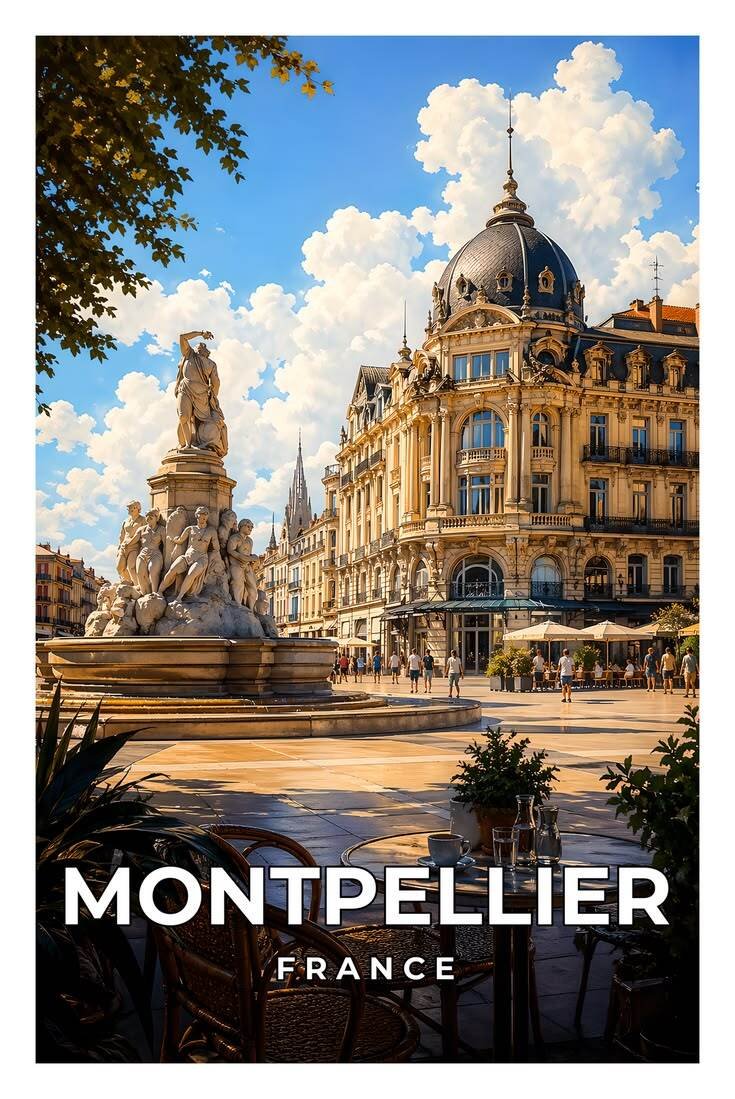
Nice and Marseille get all the attention. Montpellier is just there quietly doing its own thing, and that’s exactly why it’s worth a look. Medieval streets built from limestone that’s spent centuries baking in the sun. A student population big enough to keep the whole city feeling young and loud. Beaches a short tram ride away that somehow never gets as packed as the Riviera does. Here’s the real version of this trip, what to see, where to swim, how to plan it without wasting a day.
Getting a Feel for Montpellier in France
Montpellier in France sits down in the Occitanie region, close to the Mediterranean, south of the country. Stylish place, but relaxed with it. Elegant boulevards, old mansions locals call hotels particuliers, medieval buildings sitting right next to bold modern architecture in a way that somehow doesn’t clash. People who’ve actually visited tend to describe the region as the other Riviera. More real, cheaper, none of the polish and price tag Cannes drags along with it.
Getting around is simple too. The tram itself is worth a ride just for the design, some carriages came from a collaboration with the fashion house Christian Lacroix.
Quick Facts First
| Detail | Information |
| Region | Occitanie, southern France |
| Known for | Medieval old town, beaches, large student population |
| Best time to visit | April to June, or September and October |
| Beach access | Palavas-les-Flots and Carnon, under 30 minutes by tram or bike |
| Typical trip length | 2 to 4 days, plus day trips |
Things to Do in Montpellier’s Old Town
Start with the Écusson if things to do in Montpellier is the search that brought anyone here. Old quarter, narrow medieval lanes, rooftop wine bars, cafés packed with people who actually live there instead of tourists passing through for a photo. Place de la Comédie is right in the center, elliptical shape, people call it the Egg. Street performers and markets fill it up most of the day.
Musée Fabre is worth stopping at too, decent art collection that pulls people in from outside the region entirely. Want something more modern? Antigone gives a sharp break from the old town, designed by architect Ricardo Bofill. L’Arbre Blanc sits nearby too, a residential building actually shaped like a tree, worth seeing even just from outside. History lovers should swing by the Faculty of Medicine as well, oldest still operating medical school in Europe.
Also Read: Strasbourg Travel Guide 2026: Best Things to Do, Where to Stay & Travel Tips
The Beaches Near Montpellier
The coast’s one of the biggest reasons people come here, and it’s close, genuinely close. Palavas-les-Flots and Carnon are both under thirty minutes away by bike or tram, so a beach day doesn’t eat the whole trip planning it out. Want to go a bit further? La Grande Motte has more of a sporty, active beach scene going, plus a thalasso spa for anyone who’d rather just slow down for the afternoon instead. Point Zero Plage, one of the beaches out there, actually holds a Blue Flag award for clean water and how well the area’s managed. Says something about the quality.
Worth planning around the heat too. July and August routinely blow past 40 degrees Celsius down there. Spring and autumn are just easier, better temperatures for the city and the coast both.
Best Day Trips From the City
Montpellier makes a solid base for exploring further out, trains connect easily to nearby towns. Sète’s a great pick, nicknamed the Venice of Languedoc, known for its waterways and, strangely enough, summer jousting tournaments held on boats. The Camargue works well too, especially with kids along, wild horses, flamingos, salt marshes worth seeing on a guided tour.
History fans should get out to Pont du Gard, one of the most impressive Roman aqueducts still standing anywhere. Or spend a day in Avignon instead, home to the famous Pont d’Avignon. Wine lovers can head to Pic Saint-Loup for guided tastings, local reds and rosés both worth trying.
Practical Tips Worth Knowing
Timing matters more than people think for a trip like this. The south of France gets brutal in summer, and planning around that heat makes a real difference. April through June, or September into October, gives the best mix, comfortable weather, smaller crowds too. French is the official language here. English gets spoken plenty in tourist spots, but a few basic phrases still go a long way with locals who appreciate the effort.
Cards work fine at most restaurants and shops. Cash still helps though for markets and smaller cafés that might not take cards easily. The city runs a few festivals worth building a trip around too, a dance festival in June, jazz in July.
Must Read: Bordeaux France Travel Guide 2026: Best Things to Do, Where to Stay & Travel Tips
Wrapping This Up
Montpellier gives a version of southern France that feels lived in, not built for tourists passing through for a weekend. Between the old town, easy beach access, and day trips ranging from Roman ruins to flamingo filled wetlands, there’s enough here to fill several days without rushing through any of it. Anyone wanting the Mediterranean without the crowds or the price tag that comes with the bigger Riviera towns, Montpellier makes a genuinely strong case for itself.
Frequently Asked Questions (FAQ’s)
Is Montpellier worth it over Nice or Marseille?
Depends what someone’s after. Cheaper, quieter, feels more like a real place than a tourist stop. Nice and Marseille have their own thing going, but Montpellier’s just easier and more relaxed overall.
How close are the beaches in Montpellier?
Really close. Palavas-les-Flots and Carnon, both under thirty minutes by tram or bike. Barely any planning needed for a beach day.
What is the best time to go to Montpellier?
April to June, or September into October. Summer gets rough down there, sometimes past 40 degrees, so spring and fall just make more sense.
What is the best day trip from Montpellier?
Sète’s solid, canals, waterways, even boat jousting in summer. Camargue’s good too if flamingos and wild horses sound appealing.
Do we need a car to get around in Montpellier?
Not really. Tram covers most of the city and gets you to the beaches too. Only really need a car for day trips further out.


